Medicaid and Dental Coverage: What’s Actually Covered and How It Works
If you’re asking “Does Medicaid cover dental?”, you’re not alone. Dental coverage under Medicaid can be confusing because it varies a lot by state, by age, and sometimes by your specific eligibility category.
This guide breaks it down in clear, practical terms so you can understand what Medicaid typically covers for dental care, what to expect in your state, and how to make the most of your benefits.
Does Medicaid Cover Dental at All?
Yes, Medicaid can cover dental care—but how much it covers depends heavily on your state and whether you are:
- A child covered by Medicaid or CHIP
- An adult with Medicaid
- A pregnant person, someone in a special needs category, or living in a long-term care setting
Key takeaway:
- Children on Medicaid are guaranteed dental coverage nationwide.
- Adults’ dental coverage is optional for states, so benefits range from comprehensive care to emergency-only, or in some states, little to no routine dental coverage.
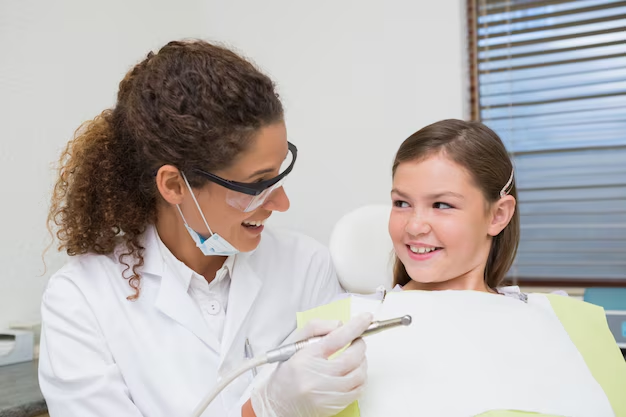
Medicaid Dental Coverage for Children
Under federal rules, children enrolled in Medicaid or CHIP must receive dental benefits. This is part of what’s known as the Early and Periodic Screening, Diagnostic, and Treatment (EPSDT) benefit.
What dental services are usually covered for children?
While details still vary by state, children’s Medicaid dental coverage commonly includes:
Preventive care
- Routine checkups and exams
- Cleanings
- Fluoride treatments
- Sealants (to protect teeth from cavities)
Diagnostic services
- X-rays
- Oral evaluations and risk assessments
Restorative and treatment services
- Fillings for cavities
- Root canals on baby or permanent teeth, when medically necessary
- Crowns and other treatments to restore damaged teeth
Other necessary services
- Tooth extractions when needed
- Treatment for dental infections or abscesses
- Orthodontics (like braces) in limited cases when there is a serious medical or functional need, not just for cosmetic reasons
The guiding principle for children is that Medicaid must cover dental services needed to prevent, diagnose, or treat dental problems, including those that affect overall health, not just the mouth.
Medicaid Dental Coverage for Adults
Adult dental coverage is where most of the confusion happens. Federal law requires states to cover dental services for children, but does not require comprehensive dental coverage for adults. That means each state sets its own rules.
Common patterns for adult Medicaid dental coverage
Across states, adult dental coverage generally falls into one of three broad categories:
No or very limited coverage
- Some states only cover emergency dental care, such as:
- Treatment for severe pain
- Infections or abscesses
- Tooth extractions when necessary for health or safety
- Routine cleanings and non-urgent treatments may not be covered.
- Some states only cover emergency dental care, such as:
Limited coverage
- States may cover some combination of:
- Exams and X-rays
- Basic cleanings
- Simple fillings
- Extractions
- There might be annual dollar limits, visit limits, or restrictions on specific procedures.
- States may cover some combination of:
Extensive or comprehensive coverage
- A smaller group of states offers broader adult dental benefits, which may include:
- Preventive and diagnostic care
- Restorative care (fillings, crowns, root canals)
- Some periodontal (gum) treatments
- Partial or full dentures in certain situations
- A smaller group of states offers broader adult dental benefits, which may include:
Benefits can change over time as state budgets and policies shift, so it’s important to check current rules for your specific state.
Quick Comparison: Medicaid Dental Coverage Basics
Use this table as a big-picture overview. Details still depend on your state.
| Group | Preventive Care (Cleanings, Exams) | Fillings/Restorative | Emergency Pain/Infection | Dentures/Advanced Care |
|---|---|---|---|---|
| Children | Commonly covered | Commonly covered | Covered when necessary | Sometimes, if medically necessary |
| Adults | Varies by state | Varies by state | Often covered at least for emergencies | Often limited or not covered, varies by state |
What Is “Emergency” Dental Care Under Medicaid?
In states with limited adult dental benefits, you may see coverage described as “emergency-only.” This usually means Medicaid helps with dental problems that:
- Cause severe or uncontrolled pain
- Involve infection, swelling, or abscesses
- Pose a risk to general health or could lead to more serious medical complications if not treated
Emergency coverage might include:
- Exams to diagnose the urgent problem
- X-rays related to the emergency
- Extra medications given during the visit (for example, anesthesia used during a procedure)
- Tooth extraction if necessary to resolve the emergency
Routine or preventive care, cosmetic procedures, and some restorative treatments may not be covered under an emergency-only benefit.
Special Groups: Pregnancy, Disabilities, and Long-Term Care
Some states offer enhanced dental coverage for certain Medicaid groups, even if general adult coverage is limited.
Pregnant individuals
Many states recognize the link between oral health and pregnancy health outcomes. As a result, some states:
- Expand dental coverage during pregnancy and for a short time after childbirth
- Cover additional services such as:
- More frequent cleanings
- Treatment for gum disease
- Certain restorative treatments
Coverage rules and how long this expanded coverage lasts vary, so it’s important to ask specifically about pregnancy-related dental benefits if this applies to you.
Adults with disabilities or special needs
For individuals with certain disabilities or conditions, some states:
- Offer additional dental services through home- and community-based services (HCBS) waivers or special Medicaid programs
- Focus on treatments that help maintain function, comfort, and quality of life, especially when dental issues affect eating, communication, or overall health
People in nursing homes or long-term care facilities
In long-term care, states may:
- Include some dental services as part of the overall Medicaid care package
- Prioritize care that prevents pain, infection, and nutrition problems
Again, it depends on state policy and the specific program you are enrolled in.
Common Types of Dental Services and Whether Medicaid Might Cover Them
Here is a practical overview of typical dental services and how they generally fit within Medicaid benefits. Actual coverage is state-specific.
1. Preventive care
Includes:
- Exams
- Cleanings
- Fluoride treatments
- Sealants
- Oral health education
Children: Usually covered as part of EPSDT.
Adults: Covered in some states, not in others. There may be limits per year (for example, one or two cleanings annually).
2. Diagnostic services
Includes:
- Initial and periodic exams
- X-rays
- Problem-focused visits for a specific issue
Children: Typically covered.
Adults: Often at least partially covered, especially for emergencies. Routine annual exams may or may not be included.
3. Restorative care (fixing damaged teeth)
Includes:
- Fillings
- Crowns
- Inlays/onlays
- Certain root canals
Children: Commonly covered when medically necessary.
Adults: Varies widely; some states allow basic fillings and a limited number of crowns per year, others may not.
4. Oral surgery and extractions
Includes:
- Simple and surgical tooth extractions
- Drainage of abscesses
- Some jaw or soft-tissue procedures
Children: Generally covered if needed.
Adults: Often covered for emergencies or when clearly medically necessary; routine extractions may or may not be covered.
5. Periodontal (gum) treatment
Includes:
- Deep cleanings
- Scaling and root planing
- Ongoing periodontal maintenance
Children: Covered when needed beyond basic cleaning, depending on the state.
Adults: Sometimes covered in states with extensive dental benefits; often limited otherwise.
6. Dentures and prosthetics
Includes:
- Full dentures
- Partial dentures
- Repairs or relines
Children: Covered only in specific medically necessary cases.
Adults: Covered in some states, often with strict conditions or maximum dollar limits. In others, dentures may not be covered at all.
7. Orthodontics (braces, aligners)
Children: Occasionally covered when needed to treat serious functional problems (such as difficulty chewing or jaw alignment issues), not for cosmetic reasons alone.
Adults: Typically not covered by Medicaid, except in very specific medical situations or special programs.
How to Find Out What Dental Services Medicaid Covers in Your State
Because state rules differ, the surest way to know what your Medicaid dental plan covers is to check directly with sources linked to your specific coverage.
Here’s a practical step-by-step approach:
Look at your Medicaid or managed care plan materials
- Review your benefits booklet or member handbook.
- Look for sections labeled “Dental,” “Covered Services,” or “Member Benefits.”
Call your Medicaid member services number
- The number is usually on the back of your Medicaid card.
- Ask specific questions, such as:
- “Does my plan cover routine dental cleanings?”
- “Is there a limit on how many fillings or crowns I can get per year?”
- “Do you cover dentures or partials?”
- “How do you handle emergency dental visits?”
Contact the dental plan directly (if you have one)
- In some states, dental is administered by a separate dental plan.
- The dental plan can explain:
- Which dentists are in-network
- Which services are covered
- Whether you need prior authorization for certain treatments
Ask your dentist’s office
- Many dental practices familiar with Medicaid can check your coverage for specific procedures and explain:
- What is covered
- Any copays or limits
- Whether pre-approval is required
- Many dental practices familiar with Medicaid can check your coverage for specific procedures and explain:
Practical Tips for Using Medicaid Dental Coverage Wisely
Even if your dental benefits are limited, there are ways to get the most out of them.
Confirm coverage before treatment
- 📝 Ask for a treatment plan that notes which procedures your Medicaid plan is expected to cover.
Know your annual limits
- Some states cap dental benefits at a certain dollar amount per year.
- Prioritize essential and preventive services so you don’t exceed your limit on less urgent procedures.
Use preventive services when available
- Cleanings, exams, and early treatment often help avoid painful and more expensive problems later.
Clarify emergency vs. routine care
- If your coverage is “emergency-only,” ask what exactly counts as an emergency under your plan so you know when you’re likely to be covered.
Keep your contact information up to date
- Make sure your Medicaid agency and dental plan can reach you with changes in coverage or new benefit options.
Common Questions People Have About Medicaid Dental Coverage
1. Why does adult dental coverage vary so much between states?
Federal rules set a baseline for children’s coverage, but give states flexibility for adults. States balance dental benefits with their overall Medicaid budgets and policy priorities, which is why:
- Some states offer comprehensive adult dental programs
- Others provide only emergency coverage or no routine benefits
2. Can Medicaid dental benefits change over time?
Yes. States occasionally:
- Expand adult dental benefits
- Reduce certain services or add limits
- Modify which procedures require pre-approval
It’s a good idea to review your coverage at least once a year, or whenever you receive new member materials.
3. What if I lose Medicaid coverage—can I still get dental care?
If your income or circumstances change and you lose Medicaid, you may still have options, such as:
- Community health centers and dental clinics that offer sliding fee scales
- Dental schools with reduced-cost clinics
- Local health departments or charity programs that focus on basic dental care
Availability varies by location, so checking local community resources can be helpful.
Bottom Line: Does Medicaid Cover Dental?
- For children: Yes. Medicaid must cover dental services to keep kids’ teeth healthy, prevent problems, and treat issues when they arise.
- For adults: It depends on the state and sometimes on the specific Medicaid program. Coverage might range from full preventive and restorative care to emergency-only treatment—or very limited benefits.
To know exactly what your Medicaid dental coverage includes:
- Review your plan materials.
- Call your Medicaid member services or dental plan.
- Confirm details with your dental provider before treatment.
Understanding your Medicaid dental benefits can help you plan your care, avoid surprise bills, and use the coverage you have as effectively as possible.
Related Topics
- Am i Eligible For Medicaid
- Are Illegal Immigrants Eligible For Medicaid
- Can Illegal Immigrants Get Medicaid
- Can Undocumented Immigrants Get Medicaid
- Can You Have Medicare And Medicaid
- Did Trump Cut Medicaid
- Did Trump Freeze Medicaid
- Do i Qualify For Medicaid
- Do Illegal Immigrants Get Medicaid
- Do Undocumented Immigrants Get Medicaid
- Does Medicaid Cover Braces
- Does Medicaid Cover Dental Implants
- Does Medicaid Cover Dentures
- Does Medicaid Cover Invisalign
- Does Medicaid Cover Orthodontics
- Does Medicaid Cover Ozempic
- Does Medicaid Cover Therapy
- Does Medicaid Cover Vision
- Does Medicaid Cover Wegovy
- Does Medicaid Cover Weight Loss Shots
- Does Medicaid Pay For Assisted Living
- Does The Big Beautiful Bill Cut Medicaid
- Does Urgent Care Take Medicaid
- How Can i Apply For Medicaid
- How Can i Get Medicaid
- How Can You Get Medicaid
- How Do i Apply For Medicaid
- How Do i Get Medicaid
- How Do i Qualify For Medicaid
- How Do i Sign Up For Medicaid
- How Do You Apply For Medicaid
- How Do You Get Medicaid
- How Do You Qualify For Medicaid
- How Does Medicaid Work
- How Is Medicaid Funded
- How Long After Georgia Medicaid Termination Can You Apply Again
- How Long After Medicaid Termination Can You Apply Again
- How Many Affected By Medicaid Cuts
- How Many People Are On Medicaid
- How Many People On Medicaid
- How To Apply For Medicaid
- How To Apply For Medicaid In Florida
- How To Apply For Medicaid In Michigan
- How To Apply For Medicaid In Texas
- How To Be Eligible For Medicaid
- How To Get Medicaid
- How To Get On Medicaid
- How To Qualify For Medicaid
- How To Sign Up For Medicaid
- Is Ambetter Medicaid
- Is Marketplace Insurance Medicaid
- Is Masshealth Medicaid
- Is Medi Cal The Same As Medicaid
- Is Medicaid Being Cut
- Is Medicaid For Old People
- Is Medicaid Free
- Is Medicaid Frozen
- Is Medicaid Getting Cut
- Is Medicaid Going Away
- Is Medicaid Marketplace Insurance
- Is Medicaid Paused
- Is Medicaid State Or Federal
- Is Medicaid The Same As Medical
- Is Medical Medicaid
- Is Medical The Same As Medicaid
- Is Medicare And Medicaid The Same
- Is Medicare The Same As Medicaid
- Is Obamacare Medicaid
- Is Trump Cutting Medicaid
- Is Trump Cutting Medicare And Medicaid
- Is United Healthcare Medicaid
- What Are The Income Limits For Medicaid
- What Are The Qualifications For Medicaid
- What Are The Requirements For Medicaid
- What Does Medicaid Cover
- What Is Difference Between Medicare And Medicaid
- What Is Medicaid
- What Is Medicaid Expansion
- What Is Medicaid Vs Medicare
- What Is The Difference Between Medicaid And Medicare
- What Is The Difference Between Medicare And Medicaid
- What Is The Income Limit For Medicaid
- What's The Difference Between Medicaid And Medicare
- What's The Difference Between Medicare And Medicaid
- When Do Medicaid Cuts Take Effect
- When Will Medicaid Cuts Go Into Effect
- Where Do i Send My Medicaid Application Back Too
- Who Gets Medicaid
- Who Is Eligible For Both Medicare And Medicaid
- Who Is Eligible For Medicaid
- Who Is Medicaid For
- Who Qualifies For Medicaid
- Who Will Be Affected By Medicaid Cuts
- Who Will Lose Medicaid
- Who Will Lose Medicaid With New Bill
- Will Children Lose Medicaid
- Will i Be Eligible For Medicaid
- Will Medicaid Be Cut
- Will Medicaid Pay For Assisted Living